Singapore: A Potential U.S. Gateway for Chinese Robotics
A venture capital firm supported by Singapore's state investor Temasek suggests that Chinese robotics companies facing U.S. import restrictions on advanced robots can still access the American market by establishing substantial operations in Singapore. Vertex Ventures China, which has invested in prominent Chinese robotics firms like Unitree Robotics, believes that by anchoring key operations, hiring, and controlling critical components within the city-state, these companies can effectively circumvent the U.S. ban.
Choon Chong Tay, managing partner at Vertex Ventures China, explained that startups with significant "substantial content" in Singapore, particularly regarding chip control for their robots, can legitimately target the U.S. market. This approach is gaining traction among investors involved with Chinese tech startups as geopolitical tensions and the U.S.-China technology competition escalate. The global surge in investment in humanoid robots and other hard-tech sectors, seen as the next wave of automation, makes this strategy particularly relevant.
In July, the U.S. administration implemented a ban on new foreign-made humanoid and other mobile robots entering the country, citing national security concerns. This action effectively closed off the U.S. market, the world's largest consumer base, at a time when Chinese manufacturers are leading the global robotics industry. Under international trade rules, a product's origin is typically determined by where it undergoes substantial transformation, according to U.S. government guidelines.
Vertex Ventures, which manages nearly $3 billion across various funds and has invested in a range of Chinese tech companies in robotics, AI, semiconductors, and advanced manufacturing, sees this as a viable workaround. Its portfolio includes key players like Unitree, autonomous-driving chip developer Horizon Robotics, logistics robot provider Geek+, surgical robot maker Edge Medical, and photonics chip specialist Lightelligence.
Unitree Robotics, for instance, derives over 40% of its revenue from international markets, with approximately 18% coming from the U.S., according to Morningstar analyst Kangyuxiao Li. This makes the U.S. a crucial market for Unitree, and losing access could significantly impact its revenue growth.
Tay is optimistic that economic imperatives will eventually outweigh political considerations. He argues that American consumers and businesses have a strong demand for efficiently produced Chinese goods, a gap that no domestic industry currently fills. If a Singapore-certified robot meets safety and pricing standards, Tay questions the justification for barring its export.
Vertex's past successful investments include the bike-sharing firm Mobike, which was acquired by Meituan in 2018, yielding a tenfold return on the initial investment. Tay's current investment focus is heavily weighted towards hardware, particularly the convergence of AI and robotics, which he terms "physical intelligence." He predicts this sector will dramatically outgrow the automotive industry in the coming decade.
Bernstein equity analyst Dien Wang notes that the recent U.S. ban signifies a significant point in the decoupling of U.S. and Chinese emerging robotics technology and could extend to related fields like intelligent vehicles and fixed robotics. However, he also points out that China holds leverage through its dominance in rare earth elements essential for robotic actuators and motors, suggesting that control over critical supply chain points could ultimately determine market dominance.
Fresh materials — MMA News

Trump Threatens to Destroy Iran's Kharg Island Oil Hub as Hostilities Escalate
U.S. forces have conducted strikes on two Iranian rocket launchers located on Larak Island. This action followed observations of Revolutionary Guard forces preparing rockets armed with sea mines for deployment into the Strait of Hormuz, according to confirmation from U.S. Central Command. N
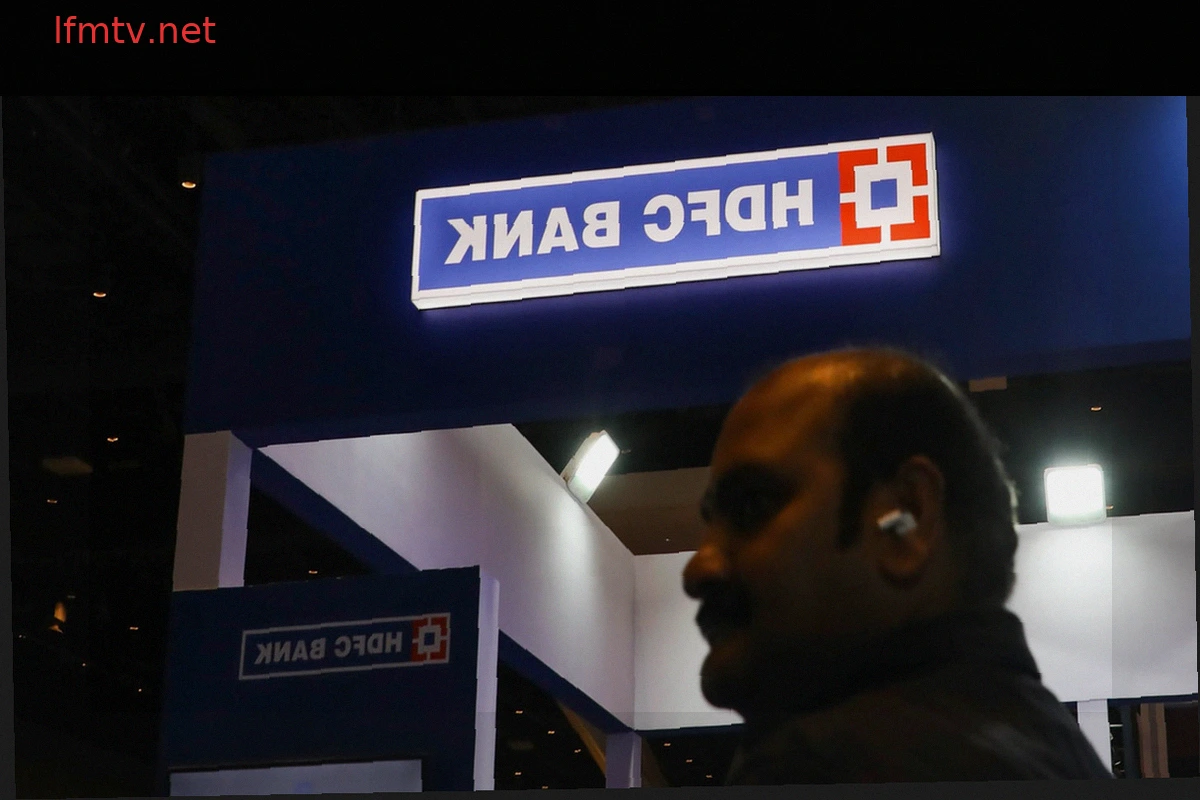
HDFC Bank Shares Rise on News of CEO's Unexpected Departure
HDFC Bank, India's largest private lender, experienced an increase in its share price on Monday, though it later pared back its gains. This movement followed a surprise announcement from Chief Executive Sashidhar Jagdishan that he will be exiting the bank upon the conclusion of his te

U.S. and Iran Exchange Strikes Amid Escalating Tensions
U.S. military forces carried out strikes on two Iranian rocket launchers located on Larak Island on Sunday. This action was taken following reports from the U.S. Central Command that Iranian Revolutionary Guard forces were preparing to launch rockets equipped with sea mines towards the

Aon Nears $17 Billion Deal to Acquire Insurance Broker USI from KKR
Aon is reportedly in advanced discussions to acquire USI, a prominent insurance brokerage firm, in a deal valued at approximately $17 billion, including debt. The seller is the private-equity firm KKR. According to The Wall Street Journal, the agreement could be announced as e
Key Stock Market Focus: Earnings, Cybersecurity, and Economic Data
This week, the stock market is under close observation as two prominent AI chipmakers, Broadcom and Palo Alto Networks, prepare to release their earnings. The dynamic cybersecurity landscape and the labor market will also be central themes. Here's an in-depth look at three critical areas t

Dolly Parton's Resilience: Underestimation as a Strength
For decades, Dolly Parton was surprisingly underestimated, a fact that ultimately became one of her greatest assets. In a 2015 interview at Dollywood Theme Park, the famously optimistic singer-songwriter candidly shared her past struggles with depression and feelings