Less than a year ago, I wrote extensively about the upcoming transformation of the PGA Tour and the pivotal role its newly appointed CEO would play. So far, Brian Rolapp has given me no reason to doubt his commitment to what’s best for a sport I’ve loved since my teenage years.
Leading a sports league is a profound responsibility to all its stakeholders. When times are good, success is celebrated with revenue flowing freely as viewers are captivated, fans flock to events, sponsors eagerly join, and branded merchandise flies off the shelves.
Conversely, challenging times can lead to disorder, especially when rival entities like LIV Golf disrupt the status quo and necessitate a significant strategic shift.
The golf industry’s attention is focused on the week of June 22nd. Following the U.S. Open, the PGA Tour heads to Connecticut for the Travelers Championship, one of the elite, designated, elevated tournaments. Rolapp has indicated he will provide an update on the future direction of this venerable sport.
The new CEO has previously outlined a vision for a two-tiered system with distinct event categories, running concurrently or staggered throughout the season. One tier will feature over 20 events showcasing the world’s top players, who earn the most, achieve the highest ratings, and attract the most attention. The other tier will function as a feeder system, offering pathways for players not in the upper echelon, as well as those who might be relegated, though the exact mechanism is yet to be announced.
I am generally optimistic about a more condensed schedule, running from January to early September, avoiding conflicts with the NFL season, and including more big-market events and the return of the cut. However, the ultimate success of these changes remains to be seen and will depend on the final execution.
As an educator in sports business, I recently presented this context to my students, posing a central question.
While it’s certain that the top-tier series will be branded as the PGA Tour, the question remains: what will the second tier be called?
Consider the NBA’s G League. It’s owned by the NBA and was initially known as the Developmental or D League before its naming rights were sold. Even though players may be highly entertaining or have future potential, the league often carries a stigma of being less relevant. This is understandable because the NBA and the G League are distinct entities, not both branded under the “NBA Tour” umbrella. Average attendance for G League games typically ranges from 2,500 to 4,000 fans per game for standard franchises.
Ultimately, it all comes down to the product and its reception by the audience, also known as fans.
From the outset, possibly as soon as next week, Rolapp and his team must carefully consider and secure the branding for the second track, or tier two – whatever its final designation may be. It needs to be right from the beginning.
To his credit, Rolapp is actively engaging with players, media partners, and stakeholders, taking his time to implement this new vision. While he may not have all the answers at the Travelers Championship, he has promised an update. I anticipate that the assembled media will focus on the significant aspects as we await the complete plan, understanding that effective packaging is crucial.
Tournaments I know well will likely fall into this second-tier category. Major champions like Jordan Spieth and Brian Harman, along with Sam Burns, all achieved their first wins at events such as the John Deere Classic and the Valspar Championship, respectively. These tournaments, where players earned their initial PGA TOUR victories, were and remain significant. They are foundational events and must be treated as such.
Perhaps the second track should be named the PGA TOUR “Essential” Series, as it serves as the bedrock for the grand structure being built. It will continue to be vital for players, media partners who invest in content distribution, official sponsors, advertisers, vendors, equipment manufacturers, tradition, record books, and the numerous charities that have always benefited from these community-focused events, which are deeply integrated into the professional sports landscape.
It would be a deeply regrettable outcome if these essential events were to lose their significance due to this impending transformation.
English Translation:
Brian Rolapp Needs to Get the Name Right, Too?
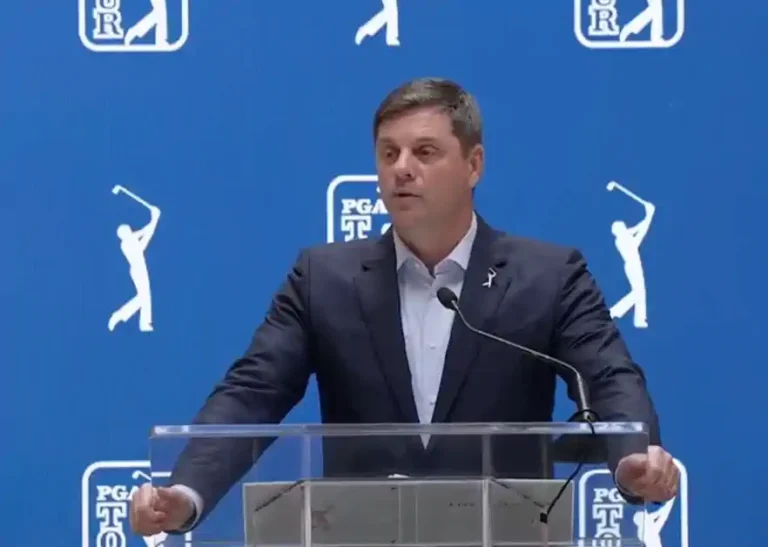
Less than a year ago, I wrote a widely circulated column about the impending evolution of the PGA Tour and the consequential role the sports business model’s newly named CEO would play in what is to come.
So far, Brian Rolapp has given me no reason to doubt his word about doing what is best for a sport I’ve been passionate about since my early teenage years.
Being a league CEO or Commissioner is a sacred trust to all stakeholders. When things are going well in today’s environment, champagne is uncorked and flows as revenue pours in because viewers are glued to their electronic devices of choice, fans are paying admission to attend, sponsors are waiting in line to join, and intellectual property such as branded apparel is flying off shelves and being shipped to homes in time for Christmas, birthdays, and graduations.
At the other extreme is disorder, the kind of confusion that escalates when rival interests, such as LIV Golf, make the status quo unsustainable and force a seismic shift in direction.
The entire industry has its calendar set for the week of June 22nd. On the heels of a new U.S. Open champion hoisting the trophy, the PGA Tour heads to Connecticut for the Travelers Championship, another one of those elite, designated, elevated, signature, higher-paying, smaller-field tournaments. Rolapp said he would provide an update on progress toward the future look and feel of this time-honored sport.
The new CEO has previously provided a glimpse into what is to come: a two-tiered system with two distinct tracks of events, running concurrently or staggered throughout the season. That’s 20 or more events featuring the best players in the world, who earn the most money, achieve the highest ratings, and attract the most attention. The other track is essentially a feeder system, providing pathways for those not in the upper echelon, as well as players who will be relegated in some manner yet to be announced.
I’m generally open-minded and optimistic about a condensed schedule that does not conflict with the NFL season and will run from January to early September, with more big-market events and the return of cuts. All this and more remains to be seen, and the proof will be in the final product.
As someone who teaches sports business at a great university, I recently brought all this context up in class to a group of students, posing an overarching question.
While there is no doubt in my mind that the first-tier series will be branded as the PGA Tour, what on earth will they call the second tier?
Think about it. The G League is already owned by the NBA and was originally called the developmental or D League before the naming rights were sold to Gatorade, which likes to refer to itself as G these days.
I’ve attended G League games, and while entertaining, they’re not the NBA. Even if players were just as entertaining or will be great in the future, the league still carries a stigma of being far less relevant. No problem, because the NBA and the G League are entirely different series and not all branded as NBA Tour. Attendance averages between 2,500 and 4,000 fans per game for standard franchises.
It all comes down to product with customers also known as fans.
From the very beginning, possibly next week, Rolapp and company must take this into account and ensure they secure the second track, or tier two, whatever you want to call the feeder/relegation division, as well as its branding. It’s got to be right from the start.
To his credit, Rolapp is meeting with players, media partners, and stakeholders. He’s taking his time to usher in this new normal. The CEO also said they may not have all the answers at Travelers, but he did promise an update. I honestly don’t see any of the assembled media asking tough questions as we await the fully baked and iced cake, though packaging really matters.
Tournaments I’ve come to know quite well will fall into this second-tier status. Major winners Jordan Spieth and Brian Harman earned their first wins at the John Deere Classic, and Sam Burns likewise at the Valspar Championship. These reduced status events are where they each became PGA TOUR winners which meant something then and now. They are essential events and must be treated as such.
Maybe track two should be called the PGA TOUR “Essential” Series because it is foundational to the high-rise skyscrapers under construction. It will remain essential to players, media partners who pay for content distribution, official sponsors, advertisers, vendors, equipment manufacturers, tradition, record books, and the many charities that have always benefited from these community events, which have become woven into the fabric of the professional sports landscape.
It would be a very sad day indeed if they lost their significance due to impending change.
“`