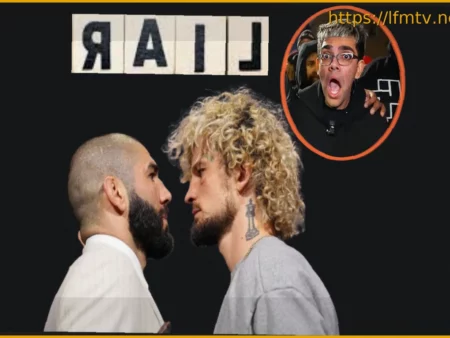
Ultimate Fighting Championship fans, martial arts enthusiasts, and sports aficionados, prepare yourselves! On July 11, 2026, during the beloved International Fight Week at the T-Mobile Arena in Las Vegas, two of mixed martial arts’ most iconic figures will clash once more, a fight that bridges two distinct eras of the UFC. Conor McGregor and Max Holloway will step into the Octagon together for the first time since their classic bout at UFC Fight Night: Shogun vs. Sonnen in August 2013, a time long before either man ascended to global superstardom.
Nearly thirteen years later, they return to the same stage, each carrying vastly different legacies into UFC 329. This matchup promises to be a global spectacle, underscoring the immense stature of the UFC, regardless of individual fighter allegiance. Beyond the display of combat prowess and the high stakes for their careers, this event also presents an exciting prospect for those interested in betting.
UFC 329 Details and Concept
The rematch is slated for the welterweight division, adding a compelling new layer to this historic encounter. Neither fighter built their legendary status at 170 pounds. McGregor achieved his status as the UFC’s first simultaneous two-division champion in the featherweight and lightweight divisions, while Holloway established one of the most dominant featherweight championship reigns in UFC history. Their collision at welterweight underscores the realities of aging, accumulated wear and tear, and fighter evolution. Both athletes are older, more seasoned, physically altered, and at a career stage where legacy often outweighs mere rankings. UFC 329 transcends a typical rematch; it is a confrontation between the past and present of mixed martial arts.
For Conor McGregor, this fight marks his return to the UFC since suffering a severe leg break against Dustin Poirier in July 2021. After almost five years away from active competition, the Irish superstar re-enters the spotlight under immense scrutiny. Questions surrounding his motivation, discipline, physical condition, and ability to compete against elite opponents have shadowed him for years. Can he silence these doubts and return to winning ways? UFC 329 is more than just another comeback attempt for the megastar who has long transcended the sport; it has the potential to be the final defining chapter of one of the most influential careers the sport has ever witnessed.
For Max Holloway, this rematch is about unfinished business, as he currently holds a 0-1 record in their rivalry. He has transformed from the teenage prospect who faced McGregor in Boston into one of the most respected and accomplished fighters in MMA history. A champion in his own right, Holloway has experienced championship reigns, grueling wars, devastating losses, and historic victories since their initial encounter over a decade ago. Despite his extensive achievements, the loss to McGregor remains an early chapter that has never truly faded from his narrative. Can he even the score and get retribution against the legend? Such a victory would undoubtedly cast his career in a new light, deepening his legacy and significance.
Odds and Predictions: What Happened Last Time?
To bet on Holloway vs. McGregor in 2026 requires a deep understanding of the sport and the nuances of their 2013 encounter. As the fight approaches, Holloway is positioned as the strong betting favorite. For McGregor, returning after years of inactivity and a significant injury, the betting odds reflect his underdog status.
History plays a crucial role in analyzing UFC matchups, and reviewing their previous fight is essential for understanding the upcoming one. The first bout between Conor McGregor and Max Holloway took place on August 17, 2013, at UFC Fight Night 26 in Boston. At that time, neither fighter had yet established themselves as major MMA names, yet even then, an aura of exceptional talent surrounded both men, hinting at future superstardom. Experts and fans alike could sense this potential.
McGregor arrived in the UFC carrying considerable hype from Cage Warriors, where he had already become a two-division champion, showcasing immense potential. His charisma, outspoken nature, precise striking, and unparalleled confidence set him apart. His UFC debut, a first-round TKO victory over Marcus Brimage just months prior, had instantly announced him as a serious featherweight prospect. He was driven and poised to dominate.
Holloway, at just 21 years old, was still in his developmental phase. While he had shown flashes of brilliance in the Octagon, he lacked the polish and experience that would later define his championship years. At the time, he was viewed as a durable, exciting Hawaiian striker with potential, but few anticipated he would evolve into one of the sport’s greatest volume punchers. He entered that bout as a slight underdog, with everything to prove in his nascent career, likely carrying a chip on his shoulder.
The fight itself unfolded in an intriguing manner. McGregor started aggressively, using his movement and timing to control the distance. His left hand consistently found its mark, and his kicks disrupted Holloway’s rhythm early on. Holloway struggled to establish his combinations as McGregor dictated the pace, forcing him into a reactive role. A critical moment occurred relatively early when McGregor suffered a torn ACL. Years later, McGregor revealed he fought a significant portion of the bout with considerable knee damage. This injury forced a dramatic shift in his strategy. Instead of continuing to fight at range, McGregor adapted by relying more heavily on his grappling and top control.
This tactical adjustment has become one of the most overlooked aspects of McGregor’s career. Despite being primarily known as a striker, he demonstrated composure and intelligence by altering his approach mid-fight. He secured takedowns, controlled the grappling exchanges, and limited Holloway’s opportunities to build momentum. Holloway displayed resilience throughout the contest. Even as the younger, less experienced fighter, he remained a threat in exchanges and refused to succumb to pressure. There were moments where his signature pressure and boxing combinations began to surface, but McGregor’s early lead and grappling control proved decisive.
After three rounds, McGregor secured a unanimous decision victory with identical scores of 30-27. In hindsight, the fight has become historically significant as it featured two future legends before they had reached their prime. Witnessing it today is almost surreal. McGregor had not yet conquered José Aldo, become a double champion, or revolutionized the economics of combat sports. Holloway had not yet embarked on his legendary featherweight reign or engaged in unforgettable wars against Calvin Kattar, Yair Rodríguez, and Justin Gaethje. The fight serves as a time capsule from a vastly different UFC era, offering a unique opportunity for retrospective analysis and admiration.
What Winning Would Mean for McGregor
If McGregor defeats Holloway at UFC 329, it would instantly rank among the most remarkable comeback victories in UFC history. The skepticism surrounding him is immense. He hasn’t competed in nearly five years, is approaching 38 years old, and is returning from a devastating leg injury. His lifestyle outside the cage has faced relentless scrutiny, and many fans and analysts doubt his ability to defeat elite competition. Consequently, a second victory over Holloway would immediately silence much of this criticism. More importantly, it would fundamentally alter the narrative of McGregor’s later career.
Instead of being remembered primarily for his decline and inactivity after 2016, he would suddenly possess a defining late-career achievement against one of the most respected fighters of his generation. The implications would be substantial. Holloway has historically been exceptionally difficult to overwhelm with pressure or durability. Very few fighters have managed to consistently hurt him over extended periods. If McGregor could return after years away and defeat a fighter known for his pace and resilience, it would validate the notion that his timing, power, and fight IQ remain elite despite his hiatus.
Commercially, a win would unlock endless possibilities. McGregor has always been the UFC’s biggest pay-per-view attraction. A successful return would immediately spark discussions about title contention, blockbuster rematches, and massive crossover events. Perhaps most significantly, however, a victory would allow McGregor to reclaim a piece of the mystique that once made him seem inevitable. For years, he was the sport’s most dangerous aura fighter. UFC 329 may represent his final chance to restore even a fragment of that identity. Beating Max as a youngster and now as an experienced fighter? The implications are immense.
What Winning Would Mean for Holloway
For Holloway, defeating McGregor now would serve as both revenge and validation. Although he has arguably built the superior overall MMA resume since their first encounter, McGregor’s 2013 victory has always been a part of the historical narrative between them. Holloway has spent over a decade evolving, while McGregor became one of sports’ biggest stars, and this rematch offers him the chance to definitively close that chapter. Furthermore, Holloway continued to ascend in the following years, while McGregor experienced a significant decline.
A victory would solidify Holloway’s standing as one of the greatest featherweights and lower-weight fighters in UFC history. It would demonstrate that while McGregor’s commercial peak may have been brighter, Holloway’s sustained excellence has ultimately proven more enduring competitively. There is also symbolic significance in defeating Conor at this stage. Holloway represents activity, consistency, and perseverance. He remained in the trenches of elite competition year after year, while McGregor’s career became fragmented. Beating McGregor now would, in many ways, feel like the triumph of longevity over celebrity.
It would also further elevate Holloway’s cross-generational legacy. Few fighters can claim meaningful victories across multiple UFC eras, with more than a decade between fights, but Holloway has remained relevant through changing divisions, changing champions, and changing styles. Emotionally, winning could carry enormous significance as well. Fighters rarely get opportunities to revisit defining moments from their youth, and Holloway lost to McGregor before either man became a legend. Defeating him now, after everything both have experienced, would provide one of the most poetic full-circle moments the sport has seen in years.
It Will Be a Classic Whoever Wins
The stage is set, and the date is confirmed. Dana White once again delivers for the fans. Neither fighter is entering this bout in the same physical condition that fans remember from their primes. This is not the McGregor of 2015 or the Holloway of 2018. Time changes fighters, and damage accumulates. Reflexes slow, and priorities, both career and life-wise, evolve. But these changes can also create even greater stakes. Fans will not be watching solely to see who wins, but to witness if McGregor can still summon greatness after years away from the Octagon, and if Holloway can finally erase the memory of that first defeat. This July, two icons will confront their past and battle the passage of time in front of the entire MMA world.