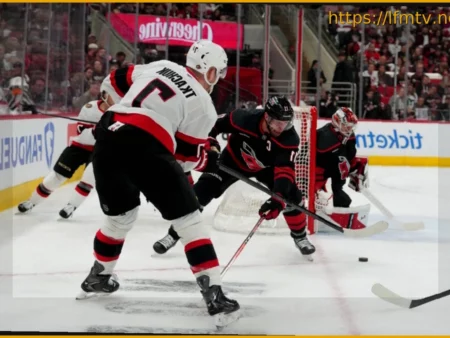
With only four teams remaining in the hunt for the Stanley Cup, the Western Conference race has dramatically shifted in favor of one team, while the Eastern Conference matchup is becoming increasingly competitive. The Vegas Golden Knights are now on the verge of advancing to the Finals, needing just one more victory. Meanwhile, the series between the Carolina Hurricanes and Montreal Canadiens is proving to be a hard-fought, potentially lengthy best-of-seven contest.
Each game in both Conference Finals, as well as the Stanley Cup Final itself, is capturing significant fan interest and fueling widespread debate. The current landscape presents a stark contrast between the conferences, yet the ultimate prize remains the same. A single additional win for Vegas would bring the Colorado Avalanche’s season to a close. Conversely, a pivotal swing game in Montreal could significantly alter the momentum between the Canadiens and the Hurricanes.
Golden Knights Take Firm Grip on the West
The Vegas Golden Knights have established a commanding 3-0 series lead against the Colorado Avalanche in the Western Conference Final, placing them on the precipice of a remarkable sweep against the team that secured the Presidents’ Trophy. Vegas secured an initial victory in Denver with a 4-2 score, followed by another road win, and then staged a dramatic comeback on home ice in Game 3 to put Colorado in a precarious position.
Game 3 served as a microcosm of Vegas’ current surge. The Avalanche initially established a 3-0 advantage in the first period. However, the Golden Knights fought back with relentless pressure, capitalizing on crucial power-play opportunities, and receiving another exceptional performance from their top offensive players. Tomas Hertl scored the go-ahead goal in the third period of a 5-3 victory, and Brett Howden sealed the win with an empty-net goal, completing one of the most surprising turnarounds of the postseason.
The Golden Knights have successfully forged an identity that perfectly suits the current playoff environment. Vegas is employing a direct, physical style of hockey, consistently finishing their checks and generating scoring chances from all angles. Furthermore, their defensive play has tightened significantly in front of their goaltenders, effectively limiting Colorado’s second-chance opportunities and forcing the Avalanche to play extensively from the outside during even-strength play.
Avalanche Facing Elimination
The narrative surrounding the Colorado Avalanche has rapidly transformed from one of dominance to one of desperation within a single week. The Avalanche, boasting a deep, well-balanced roster and a robust defensive structure, achieved the league’s best regular-season record and carried that momentum into the initial two rounds of the playoffs. Now, they are confronted with the stark reality that another loss will result in their elimination in the conference round for the second consecutive year.
The core issue for Colorado appears to be goaltending. The tandem that earned them the William Jennings Trophy during the regular season has not exhibited the same level of consistency in this series. The Avalanche have conceded critical goals at pivotal moments, stemming from deflections, screened shots, or defensive breakdowns. This has placed additional pressure on their star players to constantly play catch-up, which plays directly into Vegas’ strengths in transition play.
Despite these challenges, Colorado’s star players have still managed to create scoring opportunities. Gabriel Landeskog and his line have had periods where they controlled play, particularly in the early stages of games when players are fresh and the team’s structure is sharp. However, the inability to sustain this level of performance for the entire 60 minutes has been a persistent problem. For the Avalanche to extend the series, they will require a full 60-minute effort, improved puck management through the neutral zone, and enhanced support for their goaltenders in front of the net.
Hurricanes and Canadiens Engaged in a Fierce Battle
The Eastern Conference Final has unfolded in a markedly different fashion. The Carolina Hurricanes and Montreal Canadiens are currently tied at one game apiece after splitting the initial two contests in Raleigh. The series now moves to Montreal’s Bell Centre, with very little separating the two teams on the ice.
Montreal began the series with a convincing Game 1 victory, leveraging their speed through the neutral zone and capitalizing on opponent breakdowns to score six goals. Carolina responded in Game 2 by tightening their defensive coverage and relying on their effective forecheck. The second game was tied 2-2 heading into overtime before the Hurricanes secured the winning goal, leveling the series and restoring some semblance of order after being outplayed in the opener.
Jakub Dobes continues to be a pivotal figure for the Canadiens. The rookie goaltender has started every playoff game and has already delivered multiple high-volume performances, including a 37-save effort in their previous round’s Game 7 against Buffalo. While his workload remains substantial, he has effectively managed traffic in front of the net, displaying composed positioning and strong rebound control that has provided stability to a young Montreal defense corps.
Carolina’s Structure Versus Montreal’s Speed
Carolina has consistently relied on its established identity throughout this playoff run. Coach Rod Brind’Amour’s team continues to build its game from the defensive zone outward, maintaining tight gaps in the neutral zone and receiving quick support from their centremen. The Hurricanes have been successful in limiting second-chance opportunities and forcing opponents to earn every scoring chance from dangerous areas, traits that were evident once again in their Game 2 victory.
Frederik Andersen’s steady presence in goal has allowed Carolina to play with patience, even during short stretches where the shot clock or game flow favors the opposition. In front of him, the Hurricanes’ defensemen have efficiently moved the puck, breaking pressure and transitioning from defense to offense with quick first passes. This has facilitated sustained offensive zone time, where Carolina’s forwards wear down their opponents through consistent cycling.
On the offensive side, the blend of veteran leadership and emerging talent continues to yield crucial contributions. Taylor Hall has remained a key offensive catalyst, utilizing his speed on rushes to create space for his linemates. Jackson Blake, in his first deep playoff run, has contributed secondary scoring and energy, enabling Carolina to deploy effective lines throughout games without over-reliance on a single unit to carry the offensive load.
Looking Ahead
Game 4 in Las Vegas now presents a clear and compelling storyline. The Golden Knights have the opportunity to secure their place in the Stanley Cup Final with a victory, completing a sweep that might have seemed improbable at the outset of the playoffs. For Colorado, this game represents a chance to demonstrate the resilience of a veteran core that has previously achieved championship success and is determined to extend their current competitive window, one shift at a time.
In the Eastern Conference, the focus shifts to Montreal, where the atmosphere at the Bell Centre is expected to provide a significant boost to the Canadiens. The upcoming two games will serve as a crucial test for Carolina’s ability to manage momentum swings on the road, and for Montreal, it will be a test of their capacity to maintain their pace and structured play under intense pressure. With the series tied and both teams having proven their ability to win in different ways, the outcome of the next few games will likely be decided by small details and crucial special teams plays.
As the Conference Finals progress into their most critical stages, the field of contenders is rapidly narrowing. The Vegas Golden Knights appear poised to claim a berth in the Final. Meanwhile, Carolina and Montreal are locked in a tight contest that still feels far from resolved. The battle for the Stanley Cup is entering its defining phase, and every shift now carries the potential to significantly alter the playoff bracket.
Paraphrased Text:
The Stanley Cup race is at a pivotal point, with the Western Conference Final seeing the Vegas Golden Knights on the verge of sweeping the Colorado Avalanche and advancing to the Final. In contrast, the Eastern Conference Final between the Carolina Hurricanes and Montreal Canadiens is a much tighter affair, currently tied. Both series are generating significant fan engagement and debate, with social prediction markets tracking shifting public sentiment.
Vegas Dominates the West
The Golden Knights hold a commanding 3-0 lead over the Avalanche. After winning the first two games on the road, Vegas completed a remarkable comeback in Game 3 to put Colorado on the brink of elimination. The Avalanche had a strong start in Game 3, but Vegas’ relentless forecheck, effective special teams, and top-line performance allowed them to claw back and secure a crucial victory.
Colorado Faces Uphill Battle
The Avalanche, who were dominant in the regular season, are now facing an unexpected challenge. After strong performances in the first two rounds, they are struggling to find consistency in this series, particularly in goaltending. Key goals conceded at crucial moments have put pressure on their star players to chase games, playing into Vegas’ transitional strengths. To extend the series, Colorado needs sustained offensive pressure, better puck management, and improved defensive support for their goalie.
Eastern Conference Final is a Tight Contest
The series between the Hurricanes and Canadiens is evenly matched. They split the first two games in Carolina, with Montreal winning Game 1 through speed and capitalizing on mistakes, and Carolina responding in Game 2 with a tighter defense and successful forecheck, eventually winning in overtime. Rookie goaltender Jakub Dobes has been a standout for Montreal, facing a heavy workload but performing well.
Clash of Styles in the East
Carolina relies on its structured, defensive-minded approach, building play from the back and limiting opponents’ chances. Their efficient puck movement and sustained offensive zone pressure, coupled with timely contributions from both veteran and younger players like Taylor Hall and Jackson Blake, have been key. Goaltender Frederik Andersen provides stability, allowing the team to remain patient.
What’s Next
Game 4 in Vegas presents a significant opportunity for the Golden Knights to clinch a spot in the Stanley Cup Final. For the Avalanche, it’s a chance to show their championship pedigree and attempt a comeback. In Montreal, the home crowd will aim to propel the Canadiens forward. The next two games will be critical tests for both Carolina’s road resilience and Montreal’s ability to maintain their structure under pressure. The series remains unpredictable, with small details and special teams likely to be decisive.
English Translation:
Golden Knights on Brink of Western Sweep as Eastern Series Tightens
With only four teams remaining, the race for the Stanley Cup has significantly shifted in the West, while the East has become more competitive. Vegas is now just one win away from the Final, while Carolina and Montreal are engaged in a back-and-forth best-of-seven series that appears destined for a long haul.
Every game in both Conference Finals, along with the Stanley Cup Final, is drawing intense fan interest and debate. The picture looks quite different in each conference, but the stakes are identical. One more win for Vegas will end the Avalanche’s season. A single swing game in Montreal could tip the balance between the Canadiens and Hurricanes.
Golden Knights Seize Control of the West
The Vegas Golden Knights hold a 3-0 series lead over the Colorado Avalanche in the Western Conference Final and are on the verge of a stunning sweep of the Presidents’ Trophy winners. They won the opener 4-2 in Denver, followed it with another road victory, and then delivered a dramatic comeback at home in Game 3 to push Colorado to the brink.
Game 3 exemplified Vegas’ current surge. The Avalanche jumped out to a 3-0 lead in the first period, but the Golden Knights fought back with relentless forechecking, timely special teams play, and another standout performance from their top forwards. Tomas Hertl scored the go-ahead goal in the third period of a 5-3 win, while Brett Howden sealed it with an empty-netter to complete one of the most surprising turnarounds of this postseason.
Vegas has found an identity that fits the moment. They are playing direct hockey, finishing checks, and funneling pucks to the net from all angles. The Golden Knights have also tightened defensively in front of their goaltending, limiting Colorado’s second chances and forcing the Avalanche to work the perimeter for long stretches of five-on-five play.
Avalanche on the Brink
For Colorado, the narrative has shifted from dominance to desperation in less than a week. The Avalanche rode a deep, balanced roster and strong defensive structure to the league’s best regular-season record and carried that form into the first two rounds. Now they face the reality that one more loss will end their season in the conference round for the second consecutive year.
The questions begin with goaltending. The regular-season tandem that won the William Jennings Trophy has not looked as steady in this series. The Avalanche have allowed key goals at crucial moments, whether off deflections, screens, or missed assignments in front. This has put added pressure on their core skaters to chase games, which plays directly into Vegas’ comfort zone in transition.
Colorado’s stars have still generated chances. Gabriel Landeskog and the top line have had stretches where they controlled shifts, especially early in games when legs are fresh and structure is crisp. The problem has been sustaining that level for 60 minutes. If the Avalanche are to extend the series, they need a full-game push, sharper puck management through the neutral zone, and more support for their goaltending in front of the crease.
Hurricanes and Canadiens Locked In
The Eastern Conference Final has taken a very different path. The Carolina Hurricanes and Montreal Canadiens are tied 1-1 after splitting the first two games in Raleigh, and the series now shifts to the Bell Centre with little to separate the teams on the ice.
Montreal opened with a convincing Game 1 win, riding their speed through the neutral zone and capitalizing on breakdowns to score six goals. Carolina responded in Game 2 by tightening their defensive gaps and leaning on their forecheck. The second game went to overtime tied 2-2 before the Hurricanes found the winner, leveling the series and restoring some order after being outplayed in the opener.
Jakub Dobes remains a central figure for the Canadiens. The rookie goaltender has started every playoff game and has already delivered multiple high-volume performances, including a 37-save showing in their previous round’s Game 7 against Buffalo. His workload remains heavy, but he has handled traffic well, with calm positioning and rebound control that have helped settle a young Montreal blue line in front of him.
Carolina’s Structure Against Montreal’s Speed
Carolina has leaned on its identity throughout this run. Rod Brind’Amour’s team continues to build its game from the back end out, with tight gaps through the neutral zone and quick support from their centers. The Hurricanes have limited second-chance opportunities and forced opponents to earn every look from the interior, traits that showed up again in their Game 2 win.
Frederik Andersen’s steady presence in goal has allowed Carolina to stay patient, even when the shot clock or flow tilts the other way for short stretches. In front of him, the Hurricanes’ blue line has moved pucks efficiently, breaking pressure and turning defense into offense with quick first passes. That has set up sustained shifts in the offensive zone, where Carolina’s forwards grind down opponents on the cycle.
Offensively, the combination of veterans and younger players continues to produce timely contributions. Taylor Hall has remained a key driver, using his speed to attack off the rush and create space for his linemates. Jackson Blake, in his first deep playoff run, has chipped in with secondary scoring and energy, helping Carolina roll effective lines throughout games without relying solely on one unit to carry the load.
What Comes Next
Game 4 in Las Vegas now carries an obvious storyline. The Golden Knights can punch their ticket to the Stanley Cup Final with a win and complete a sweep that would have seemed unlikely when the playoffs started. For Colorado, it is a chance to show the resilience of a veteran core that has won before and is trying to extend this window with a comeback that starts one shift at a time.
In the East, the scene shifts to Montreal, where the Bell Centre crowd will look to push the Canadiens ahead in the series. The next two games will test Carolina’s ability to manage momentum swings on the road and Montreal’s capacity to maintain its pace and structure under pressure. With the series tied and both teams showing they can win in different ways, small details and special teams could decide the next few nights.
As the Conference Finals move into their most important games, the field is narrowing. Vegas has one hand on a berth in the Final. Carolina and Montreal are locked in a tight fight that still feels far from decided. The battle for the Stanley Cup is entering its defining stretch, and every shift now has the potential to change the bracket.